The Veracity
page-banner-shape-1
page-banner-shape-2

Software Development

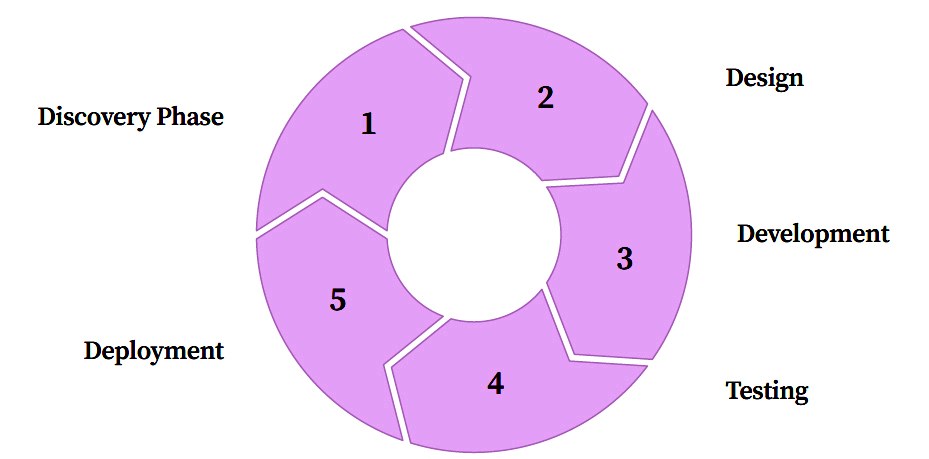
Veracity Development Process (Iterative Approach)

We follow an iterative development process for efficiency and flexibility.

Ensuring adaptability and incremental improvements in every phase.

Each phase incorporates feedback loops and refinements to align with business needs.

Discovery Phase – Understanding the Client’s Needs

Stakeholder Engagement

Engage with stakeholders to understand business objectives and challenges.

Market Research

Conduct market research, competitor analysis, and feasibility studies.

Goal Definition

Define clear project goals, scope, and high-level requirements.

Frequent Check-ins

Frequent check-ins with stakeholders to ensure alignment and adaptability to evolving needs.

Planning & Requirements Gathering

Requirement Definition
Business analysts and consultants define detailed functional and non-functional requirements.
Iterative Delivery Planning
Planning for iterative delivery with quick feedback cycles and continuous refinement.
Product Backlog Creation
Product backlog creation and prioritization of features for incremental development.
Flexible Roadmap
Ensuring flexibility in the roadmap to accommodate evolving business priorities.

Designing the Blueprint (Solution Design & Sprint Planning)

Architecture Design
System blueprints, workflows, and wireframes are designed.
Technology Stack Selection
Selection from Java, .NET, Python, JavaScript, TypeScript, React, Angular, Vue.js, AI, Cloud (AWS, Azure, Google Cloud), and Database Solutions (MySQL, PostgreSQL, MongoDB).
Security and Scalability
Security and scalability are considered to future-proof the solution.
Iterative Design
Regular reviews to iterate on designs based on stakeholder feedback.

Development Phase (Building the Solution)

Full-stack Development
Full-stack development covering frontend, backend, and database integration.
Incremental Coding
Incremental coding and continuous integration for faster feature delivery.
AI-driven Process Automation
AI-driven process automation, chatbot development, and intelligent AI agents.
Development Tools
Docker, Kubernetes, Jenkins, Git, GitHub, GitLab, Bitbucket.
Regular Reviews
Regular sprint reviews, retrospectives, and continuous feedback to enhance functionality.

Quality Assurance & Testing

Comprehensive Testing
Manual and automated testing to ensure performance, security, and usability.
Testing Types
Regression, unit, integration, and system testing throughout the development cycle.
Automated Testing Tools
Selenium, JMeter, TestNG, Postman, Cypress, Appium, Cucumber, Jest, Mocha, Chai.
CI/CD Integration
Incorporating automated testing in CI/CD pipelines for continuous improvement.

Deployment & Go-Live

DevOps-driven Deployment
Seamless integration between cloud and on-premise infrastructure through automated DevOps pipelines
System Verification
Comprehensive system verification and performance monitoring before production release
Implementation Tools
Deployment using industry-standard tools like Terraform, Ansible, Chef, and Puppet
Client Training
Thorough client training programs to ensure successful system adoption
Continuous Deployment
Iterative release cycles for smooth transition and minimal disruption

Post-Deployment Support & Continuous Improvement

Performance Monitoring
Monitoring software performance and addressing client feedback.
Feature Enhancements
Feature enhancements, updates, and bug fixes to optimize functionality.
AI-driven Analytics
AI-driven analytics for predictive maintenance and improvements.
Monitoring Tools
Performance monitoring tools: Prometheus, Grafana, New Relic, Splunk.
Backlog Grooming
Regular backlog grooming for new features and improvements based on evolving needs.